
North Carolina ranks among the top states for inbound migration. With Raleigh, Charlotte, and Wilmington leading the way, the Tar Heel State is attracting new residents — and creating new opportunities for growth.
The Big Picture: Where Americans Are Moving
Across the U.S., migration patterns are shifting. Fewer people are relocating overall, but those who do are choosing destinations carefully — favoring metros with job opportunities, affordability, and quality of life.
That means growth is no longer spread evenly across the country. Instead, it’s concentrated in select Sun Belt and Southeastern states — and North Carolina is right near the top of the list.
Top Inbound and Outbound States in 2024
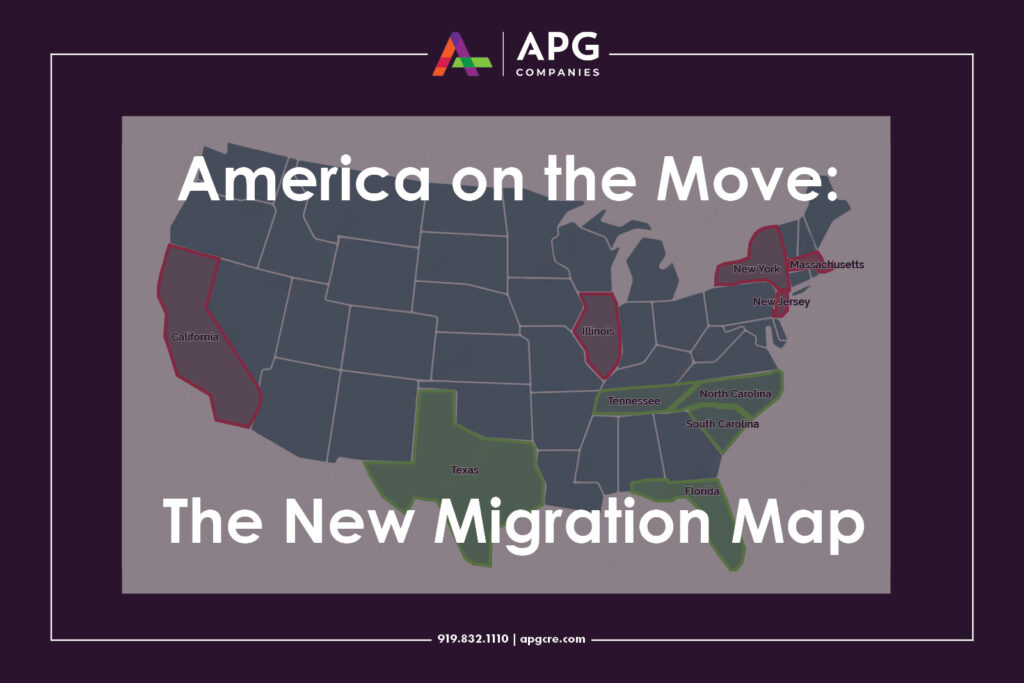
Top 5 States for Inbound Migration (2023–24):
- Texas (+85K)
- North Carolina (+82K)
- South Carolina (+68K)
- Florida (+64K)
- Tennessee (+48K)
Top 5 States for Outbound Migration:
- California (–239K)
- New York (–120K)
- Illinois (–56K)
- New Jersey (–36K)
- Massachusetts (–27K)
The shift tells a clear story: Americans are leaving traditional gateway states in favor of regions that balance affordability and opportunity.
North Carolina’s Advantage: Lifestyle Meets Opportunity
North Carolina added more than 82,000 new residents in just one year, second only to Texas. This isn’t a coincidence. The state offers:
- A lower cost of living compared to major coastal markets
- Strong job growth in technology, healthcare, finance, and higher education
- A diverse geography — from beaches to mountains — that boosts quality of life
It’s no wonder that movers from New York, Florida, and neighboring Southern states are choosing North Carolina as their next home.
Spotlight on Raleigh, Charlotte, and the Triangle Region
Raleigh-Durham and Charlotte continue to be migration magnets. The Triangle in particular offers a unique mix: a thriving tech and research economy, nationally ranked universities, and a steady pipeline of educated talent.
Counties surrounding these metros — like Johnston near Raleigh and Brunswick near Wilmington — are among the fastest-growing in the U.S., pushing North Carolina’s population past 11 million.
For the Triangle, this growth means rising demand for housing, retail, and office space — all critical signals for the commercial real estate market.
Rising Stars: Wilmington, Hickory, and Greenville
It’s not just the big metros driving growth. Wilmington was the #1 metro in the U.S. for inbound migration in 2024, with 83% of moves inbound. Hickory (75%) and Greenville (74%) also ranked in the top 10.
These smaller markets highlight the trend toward secondary metros: midsize cities offering lifestyle, affordability, and room to expand.
What Migration Trends Mean for Business and CRE
For commercial real estate, these migration shifts matter:
- Targeted growth corridors like Raleigh-Durham and Charlotte are prime areas for development.
- Secondary markets such as Wilmington and Hickory are gaining traction for retail, housing, and logistics investment.
- Strategic site selection is critical, since growth is clustering in specific metros rather than spreading evenly.
Closing Note
Migration may be slower nationwide, but in places like North Carolina, it’s more intentional than ever. For families, it’s about quality of life. For businesses and developers, it’s about planning ahead for where people will live, work, and thrive.
From the Triangle to the coast, North Carolina is shaping up to be one of the country’s most dynamic destinations for years to come.
Sources: U-Haul, Placer.ai and Allied